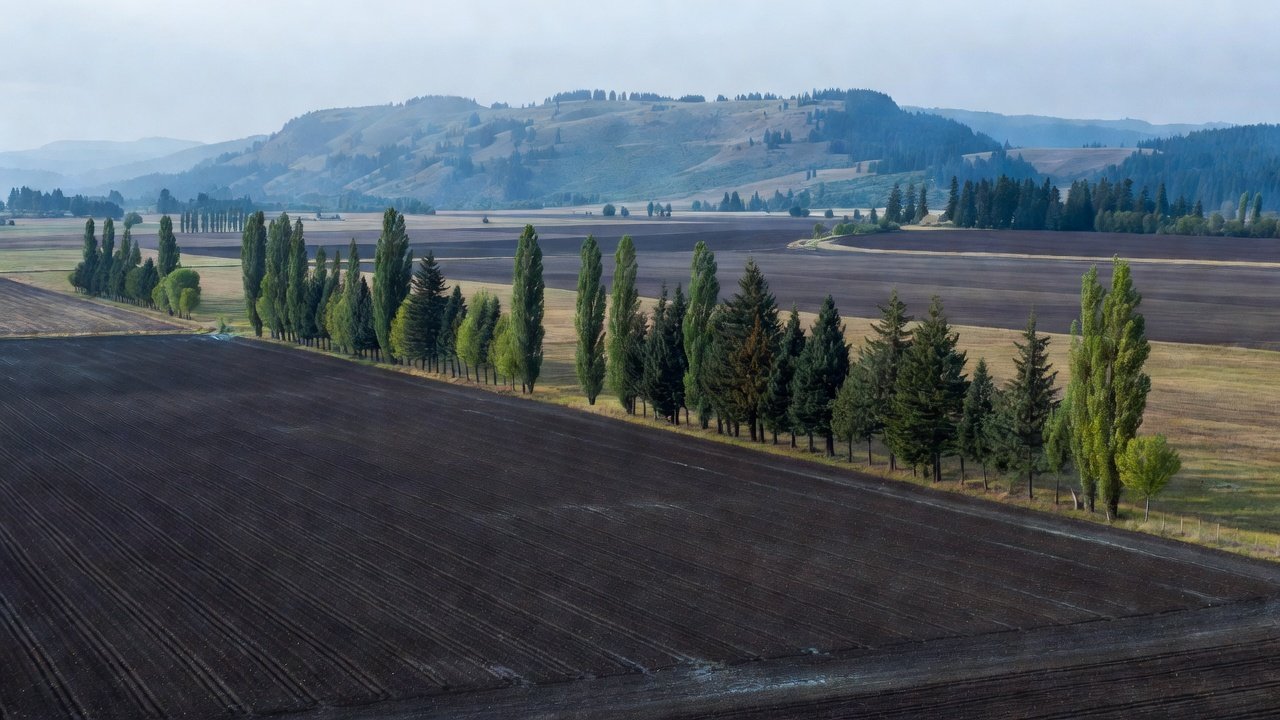
If you are looking at agricultural land in the Skagit Valley, there is a reasonable chance the parcel in front of you already carries a conservation easement — or that the seller has been approached about selling one. Roughly 15,400 acres in Skagit County are now protected this way, across approximately 170 participating landowners.
For buyers, an easement is a permanent, recorded restriction that travels with the land. For sellers, it is a way to convert development value into cash without giving up ownership or farming. Both sides of that transaction are routinely misunderstood, and the misunderstandings run in opposite directions.
What the program is
Skagit County commissioners established the Farmland Legacy Program in 1996. It operates through the Conservation Futures taxing mechanism, a tool authorised by the Washington State Legislature that allows counties to levy a small property tax dedicated to acquiring interests in land for conservation.
Since 1997 the program has drawn about $15 million from that tax source, supplemented by roughly $10 million more in grants and nonprofit contributions. The participating landowners range across the county’s agricultural economy — dairy and cattle operations, berries, flowers, and row crops.
The program’s purpose is specific and worth stating plainly, because it explains every design choice within it: Skagit County holds some of the most productive farmland in Washington State, that farmland sits on flat, well-drained delta ground that is also ideal for building houses, and once it is subdivided it never comes back. The program exists to break that link permanently.
What an easement actually does
The mechanism is the purchase and retirement of development rights.
Land ownership is a bundle of separable rights — the right to farm it, to live on it, to lease it, to sell it, and to develop it. A conservation easement under this program buys one specific right out of that bundle and extinguishes it. The landowner receives a payment reflecting a portion of the property’s market value in exchange for permanently retiring the potential for residential development.
What the landowner keeps is substantial and frequently underestimated:
- Ownership. The land is not transferred. There is no public ownership interest and no public access created by the easement.
- The right to farm it. Agricultural operations continue, and the whole point of the program is that they should.
- The right to sell it. The land remains fully transferable on the open market.
- The right to lease it. Rental to another operator is unaffected.
What is gone is the ability to subdivide and build residential development. That restriction is recorded against the title and runs with the land in perpetuity. It binds every future owner, not just the one who signed it.
If you are buying land with an easement on it
Start from the recorded document, not from a general description of the program. Easements are negotiated individually, and the terms vary in ways that matter enormously to how you can use the property.
Read the actual easement, in full, during your inspection period. It is a recorded instrument and will appear in the title report. The specifics you need are: what structures are permitted, whether an existing farmhouse or farm buildings are excluded from the restricted area, whether additional agricultural structures can be built, and what the terms say about non-agricultural uses.
Establish whether a residence is allowed. This is the question that most often produces a bad surprise. Some easements exclude an existing home site or a designated building envelope. Others do not permit a dwelling at all. A buyer intending to live on the property must confirm this before removing contingencies, and confirm it from the document rather than from a listing description or a verbal assurance.
Understand the pricing. Easement-protected land is generally less expensive per acre than comparable unrestricted ground, because the development value has already been sold off and retired. For a buyer who wants the land to farm, that is a straightforward advantage — you are not paying for development potential you were never going to use. For a buyer who imagined eventually splitting off a parcel, it is a wall.
Do not expect flexibility later. These easements are permanent. There is no ordinary process for amending or extinguishing one because the land became more valuable or the family’s plans changed. Buy the property for what it is permitted to be.
If you are selling development rights
The proposition is a payment for retiring development potential while continuing to own and farm the land. For a working farm, the appeal is direct: it converts a paper asset — the theoretical subdivision value that would only be realised by ending the farm — into working capital, without selling the farm.
Landowners use the proceeds for the things farms need capital for: equipment, buildings, debt reduction, buying adjacent ground, or funding a generational transfer where one heir wants to keep farming and the others need to be bought out.
Practical considerations:
- It is competitive and it is not fast. The program has finite annual funding and evaluates applications against conservation criteria — soil quality, parcel size, agricultural viability, proximity to other protected land. A parcel that consolidates a block of already-protected ground scores better than an isolated one.
- Get independent advice on valuation and tax treatment. The payment reflects a portion of market value, and the tax treatment of an easement sale is a genuine specialist question. A donated or partially donated easement has different consequences from a straight sale. Talk to a tax professional who has handled agricultural easements specifically.
- Involve the next generation before signing. This is a permanent decision that binds heirs. Families who work through it together in advance avoid the conflict that surfaces when an heir who expected to subdivide discovers the right no longer exists.
- Applications and criteria are handled by the county. The Skagit County Farmland Legacy Program administers the process directly.
What it means for the county’s market
The program’s cumulative effect is a structural feature of Skagit County real estate rather than a marginal one. Protected acreage has grown steadily — from around 13,500 acres through 14,750 to roughly 15,400 — and each addition permanently removes ground from the potential residential supply.
For anyone buying a home in Mount Vernon, Burlington, or the surrounding communities, this is part of why the county looks the way it does. The open delta farmland that defines the drive down Highway 20 and makes the tulip fields possible is not merely undeveloped. A meaningful share of it is protected in a way that cannot be reversed.
That has a predictable consequence: residential growth concentrates within and around the existing cities rather than spreading across the valley floor. Buyers who want acreage in Skagit County will increasingly find that the available options are in the foothills and the upriver areas rather than on the delta — and those come with a different set of due-diligence questions entirely.